Saturday, 8 October 2016

Genre Theory - Wide Study

Before I start looking at genres, I want to present some of my research into the theories behind genre, since it is often linked with the marketing of a film and could aid my approach in selecting a genre for my own product.  

John Fiske

John Fiske examines genre from a contemporary perspective. He believes that we tend to relate the events we experience in reality to things we have watched. In addition he proposes that we construct a context of what we are watching around what we have already seen. In other words our understanding of genre is built on the similarities we notice between different products. I could incorporate this into my short film by including conventions that are identifiable with other products so that audiences resonate with the similarities. However I do not want to feel restricted by trying to create a product which reminds them of something else; I want my short film to be distinctive and impactful. 

He states that genre 'attempts to structure some order into the wide range of texts and meanings that circulate in our culture'. In other words genre operates as a system of categorising films. 

Henry Jenkins 

Jenkins strongly agreed with the convergence of multiple genres, or 'hybridisation',  since he felt that genre should not be seen as labelling or as restrictive, but as an opportunity to use diverse creativity. He sees hybridisation as a way to 'maximise audience appeal but also to offer a unique selling point by appearing to break the rules.'  This can be associated with sub-genres and how they are used to give the film a different perspective. For example a thriller can be seen as psychological, action, conspiracy, crime etc. 

This is something that I would like to consider in my work, because breaking the rules of conventional genre and using a hybrid blend seems like a far less predictable way to construct a story. 

John Hartley 

Hartley's primary belief is that 'genres are agents of ideological causes' which is centered around the concept that genre is interpreted differently depending on cultural factors. As needs and desires change, then so will the way we perceive genre. For example traditional romances will have been defined by their convention to focus on heterosexual relationships. However in contemporary society that would no longer be politically correct since governments and laws surrounding other sexualities have become far more accepting, so romances are just as likely to occur between two men or two women, as can be seen in Brokeback Mountain or Blue is the Warmest Colour. 

In terms of whether I would use this, I don't think it has relevance to my project. Although it is important in terms of wider media issues, I think that I will focus on current genre ideologies rather than how they have changed. As a result I am going to discard Hartley's theory from my actual product. 


Daniel Chandler

Chandler perceives genre as restrictive. By categorically labelling films their uniqueness is immediately undermined by being classified under a heading with thousands of others. He identifies genre as being based on the notion that products are conventionally similar through aspects of content or structure. I am definitely in agreement with Chandler regarding how genre is more of an institutional concept established for marketing purposes. I think that it often misunderstands the deeper expression of a film by asserting it a label through stereotyping. This is distinguishable with the two Captain America films, Winter Soldier and Civil War. Although they are instantly labelled as blockbusters, superhero films and part of the Marvel franchise, the directors see their products as a 'political thriller' and a 'psychological thriller' respectively. 

I think that this theory will enable me to feel less restricted by conventional techniques for my short film. Although selecting a genre can assist in providing the basis for my research, I will use Chandler as a way of not becoming too reliant on genre, combining it with Jenkins' theory of hybridisation to go beyond the limits of one particular genre. 


Steve Neale

He states that 'genres are instances of repetition and difference' and goes on to elaborate that 'difference is absolutely essential to the economy of genre'. By 'repetition' he means that a film must conform by using enough conventions of a particular genre in order for it to still be recognised under that heading. On the other hand, by 'difference' Neale is expressing that a film needs to subvert genre conventions in order for it to stand on it's own merit rather than being recognised as a poor imitation. 

This is a theory I would definitely have used, even if it had been without researching Neale. I want my product to retain characteristics of the genre but also modify it into something new and original, which would mean adopting both 'repetition' and 'difference' into my short film. 


David Buckingham

Buckingham proposes that genres are 'in a constant state of negotiation and change' which relates to Hartley's theory that genre is shaped by the changing society. Like Hartley, Buckingham believes that genres are not fixed and our understanding of them will change over time. He sees the media as a way of molding culture into our lives. But also as I found with Hartley, I feel that this bears little relevance to my work. Analysing how genre is changing over time is not a theoretical approach which will enhance the quality of my short film, so I am very unlikely to include Buckingham's research in the planning of my work. 


Jason Mittel

Mittell is a theorist who views genre as a commercial label, seeing it as a ploy by institutions. He believes that genre is a marketing strategy that thrives on 'exploiting an audience who enjoy certain types of representations.' Despite being rather critical of institutional control, I think that the basis for his theory is applicable to my work, even though it is just highlighting how genre and audience are interconnected. However I would disagree and point out how there is no genre that is aimed at a singular audience, for example Westerns can be aimed at an adolescent demographic, like The Magnificent Seven or Lone Ranger remake, or it can be aimed at older viewers, like Bone Tomahawk and The Hateful Eight. Even animated films (which are historically renowned for having a demographic of younger children) can be aimed at adults, an example of which is this year's Sausage Party. 
I agree that genre is related to audience, but I probably won't use Mittell's theory since Neale's and Chandler's are more compatible with my task. Mittel's, on the other hand, focuses on media ownership. 

Barry Keith Grant


Grant acknowledges that 'defining film genres is surprisingly complex and difficult' but his most appropriate studies are focused around the use of sub-genres. Sub-genres are underlying subdivisions that are not as prominent as the main genre, but Grant expresses that all film genres have sub genres working within them. He suggests that this allows audiences to identify and ultimately connect with the film on a more specific level, taking away a deeper understanding of it. 
Grant's theory is similar in a way to the study of hybridisation proposed by Jenkins, since both function around the fact that films contain multiple genres which operate at different levels of overtness. I will employ Grant's theory into my work probably alongside Jenkins' since I would like to demonstrate my ability to draw on different genres to evoke a variety of emotion from the audience and hopefully develop an expressive piece of work. 


Now that I have explored the variety of genre theories and their compatibility with my task, I will take a look at genre itself and determine which of them are most suitable to my coursework. 

Tuesday, 4 October 2016

Editing Techniques

In addition to an awareness of cinematography, editing will also be a key skill needed to construct my finished product. Although editing is largely down to personal preference, it would still be useful to understand the different techniques I could adopt when arranging all of my individual shots into one continuous narrative. Since the role of editor is one I am not so familiar with, this will be an opportunity for me to gain a theoretical approach before I apply this knowledge at a practical level. 


  • Cut: In a broad sense, a cut is the most basic type of edit in film from which all others derive. It is a very simple change from one shot to the next without any transitional effects in between. 
  • L Cut / J Cut: This is where the audio and video files are recored separately, which consequently allows them to be edited separately. In a J Cut, the sound of the scene precedes the visuals of the scene. This helps to imply the context of the next scene whilst still lingering on the previous image. An L Cut is more concerned with continuity than transition. The visual shots change while the audio remains continuous. For example in a conversation the camera may cut between characters but use the audio from just one take if the dialogue is clearer and more pronounced. 
  • Match Cut: Also known as Cutting on Action, the match cut maintains the continuous flow of an action across two different shots. It is done to create a seamless, logical consistency. For example one character might throw a punch and then use a match cut to show the opponent receiving the punch. 
  • Graphic Match Cut: A Graphic Match Cut doesn't continue an action like the match cut, but maintains a visual reference from the previous scene. For example a character reading a newspaper might cut to the same newspaper being read by another character in the next scene.  
  • Parallel Editing: Can also be identified as a cross cut, this edit is a technique that alternates two or more different scenes happening in different locations. It is very common in television shows where at the end of an important episode, parallel editing will be used in the form of a montage to show where all the different characters are and what they're doing. The series finales of The Wire and Sons of Anarchy are good examples, bringing closure to multiple storylines at once. 
  • Cutaway: A cutaway is like an inserted shot that interrupts the focus of the main scene and draws our attention to something else temporarily. It tends to offer more insight into the surroundings, for example in the final battle of Avengers Assemble the camera regularly cuts away from the superheroes fighting to show us the chaos being experienced by the civilians and the police. 
  • Fast Cutting: This is a fairly easy term to understand. Fast cutting refers to the pacing of a scene, where several shots of brief duration are edited together (like in a fight scene) which allows the action to flow smoothly and appear intense. 
  • Slow Cutting: By process of elimination, slow cutting uses shots of longer duration to make a scene appear more fleshed out. It uses less shots and allows a slower pace to be established, since there aren't many changes in perspective. 
  • Smash Cut: A smash cut takes place when one scene abruptly changes into another for aesthetic or narrative purposes. Typically this is used for juxtaposition, where an intense cliffhanger will use a smash cut to the next scene where everything is tranquil. In the opening of Casino Royale, James Bond is having a conversation with an opponent about the death of one of his henchman. The scene uses jump cuts from the conversation to the gritty fight scene showing Bond killing the henchman. 


Saturday, 1 October 2016

Types of Camera Shots/Angles

Before I can analyse other examples or plan my short film at a technical level, I will need to have an awareness of the types of camera shots and camera angles employed by filmmakers. Although I have a vague recollection of this work from GCSE level, I think it shall definitely be beneficial to go over this since it will play such a significant role in the practicalities and construction of my film.   

  • Close Up: A close up is a standard shot that aims to focus on the emotion of a character's facial expression. In terms of framing it usually consists of the head and shoulders.

  • Mid Shot: The mid shot usually frames the figure from the waist upwards, allowing the camera to capture some level of movement as well as facial expression.

  • Long Shot: With the long shot the entirety of a character is visible as well as some of the background. An extreme long shot would place more focus on setting than on character, often synonymous with an establishing shot.


  • Aerial Shot: Not to be mistaken with a crane shot or bird's-eye-view shot, the aerial shot simply means the camera is mounted in the sky, such as on a helicopter or drone. These aerial positions can enable expansive landscapes to be filmed while also providing a sweeping scope of the settings. 

  • Two Shot: The two shot does what it says. It includes two people in the frame, which saves cutting to and from a character. They help to establish relationships between characters by allowing the viewers to compare them at the same time. 


  • POV: The point of view shot puts you in the position of a character or an object. Typically it is used when a person wakes up in an unknown territory. It shows you how the character is perceiving what's in front of them, using first person to immerse the audience. 

  • Dutch Angle: This is sometimes known as a canted angle or oblique angle, and focuses on the camera itself being positioned at a tilted angle. The horizon of the shot is not parallel with the camera frame. It is usually employed to show uneasiness or instability. 

  • Tilt Shot: The tilt refers to a type of movement. The camera rotates up or down while mounted in a fixed position. It can be distinguished as the opposite of panning, which refers to movements from left to right. This can be spotted in the opening shot of Revenge of the Sith, where the camera tilts down from a shot in space to where a large spaceship is cruising along. We start with a shot of tranquility but tilt down to a scene of war. 


  • High Angle: Shot where the camera looks down on the subject from above, which can be used to expose a character by making them seem insignificant.

  • Low Angle: The low angle shot is used to opposite effect, making the subject seem imposing. The camera is positioned at a low angle tilted upwards. 

  • Arc Shot: An arc shot is somewhat similar to a tracking shot, but moves in a semi-circle around the subject. The circular motion around the character gives the impression of bewilderment, making the setting appear perplexing. During the final boxing match in Creed the camera does an arc shot around the boxers which makes the fight feel claustrophobic and intense. 

  • Tracking Shot: Tracking shots are becoming more and more acclaimed due to their complexity and difficulty to produce. The camera follows a character as they move either through a setting or a piece of action, while mounted on a dolly to give it a steady level. The hallway fight in Daredevil (below) is quite a famous example of a tracking shot, and its a style that director Alejandro Inarritu is renowned for using in his films Birdman and The Revenant. 


  • Zoom: One of the more basic camera shots, zooming in and out helps the viewer to determine what they should be looking at. The camera moving inwards usually directs us to something specific, whereas zooming outwards provides a wider perspective and ambiguity. 

  • Focus Shifts: A focus shift involves lens manipulation, blurring either the foreground or the background of a frame. In a way this is similar to zooming, but rather than narrowing or widening the frame a focus shift merely changes what the audience focuses on. A pull focus draws the focus from the background to the foreground, while a push focus moves the focus from the foreground to the background. 

  • Establishing Shot: An establishing shot is used in between scenes to determine where the action is about to take place, done for audience clarification. It would typically constitute as a wide angle shot due to it's need to frame a large setting. 
  • Over the Shoulder Shot: When two characters are interacting an over the shoulder shot is used rather than constantly cutting away from one to the other. It means that both characters will be in the frame but the camera will be looking at one of them over the shoulder of the other, so that it gives a sense of intimacy to the scene. Otherwise cutting back and forth gives the effect of detachment and bad continuity. 
  • Wide Angle Shot: A wide angle shot can serve the same purpose as an establishing shot (to offer a sense of scale and a perspective on the setting) or it can be used to represent the insignificance of a character by making them seem small. 
  • Pan: Unlike a tilt shot, the pan moves the camera left to right while remaining mounted in a fixed position. It is used to sweep around a scene and give a sense of scope that cannot be captured in a stationary frame. Tarantino uses a pan shot in the opening of Hateful Eight to establish the bleak, harsh landscape that the story will unravel in. 

  • Bird's Eye View Shot: A bird's eye view takes place directly above the action, enabling us to look down on what is taking place. 


  • Crane Shot: A crane shot is where the camera is mounted on a mechanical extension or jib, and allows a swooping motion that can extend in any direction. Typically used to end a film by craning over the landscape in the closing shot. However it is also employed to capture fast moving action that a cameraman cannot physically keep up with. 


  • Eye Level: An eye level shot takes place at the same level as the character, allowing us to engage with them at an equal height. It differs from a close up because a close up can focus on anything, but an eye level shot makes sure the audience can interact with the character without feeling smaller or taller. 

Thursday, 29 September 2016

Conventions of Short Films


I was going to do a blog post on the narrative theories associated with short films, however I am yet to find anything substantial. It would seem that most short films conform to the principal theorists I mentioned in my last post, but on a more condensed running time. So I am going to proceed with looking at the conventions of short films, because I think that this will definitely be more insightful as to how narratives are made concisely and technically constructed. 

I will use Internet sources to do some research, but then I also intend to watch some short films myself to establish some conventions that I find and that others may have missed. Obviously short films are characterised by their shortened length so I do not feel the need to explore that, but here is what I have found:

Character

The main points to be identified regarding  character (and sometimes narrative) are that there should only be a limited cast. This is because a short film's duration, which is five minutes in my case, doesn't provide the length to establish backstories and character development. This is also done as a way of simplifying the narrative, since audiences do not want to be bombarded with characters they are expected to connect with in a short space of time. In relation to narrative theory, I would therefore need to select only the essential archetypes from Propp's list. 

Narrative

In terms of plot and story, most short films will follow a linear pattern with an easily accessible narrative. That means that there should be no overly complicated political conspiracy or murder mystery to solve over the course of five minutes. Instead I find that the complexities of the story come not in the events, but in the subtext. The subtext refers to the elements that aren't overtly expressed, and often come in the form of a moral dilemma or emotional depth. I have found that many short films (my reference point here is the short film 'Passing') use a basic plot that often forces the characters to undertake a new perspective, creating a simplistic but impactful story told with nuance. 

Setting

Settings closely relate to narrative and also provide the main component of the mise-en-scene. Short films tend to use minimal locations in order to keep the context contained and establish a less confusing journey for the audience to follow. Although it doesn't matter where the film takes place, the location is more or less maintained throughout. This would put me off making an adventure short film since they rely on the immersive journey into uncharted locations. But the short film '2 + 2 = 5' or the afore mentioned 'Passing' demonstrate the importance of simple locations. Many short films operating on a low budget tend to craft their narrative around offices or forests, and tend to stick to one unique location. Even when looking at feature length films, this is a strategy that has often worked well in narratives such as 127 Hours, Room or Locke. 

Dialogue

I have to admit I was surprised upon watching a few short films to notice that dialogue is quite infrequent. The majority of the narrative is conveyed almost wholly through visual and musical means like the mise-en-scene and the score.  Since we aren't allowed to take other music it would mean making our own, which is not an area of expertise for me and additionally time-consuming. Therefore I think I will need to use more dialogue than is conventional in order to account for the fact that I won't have an instrumental soundtrack guiding the viewer's emotions. 'Passing' again is an example where there is almost no dialogue, and 'The Desk' follows a similar pattern. 

Twist

Depending on the genre, a twist can act as a way of not necessarily shocking the reader, but of making them reflect on how their expectations were subverted. This would be most likely to occur in a horror or thriller short film since they are conventions of those genres, but a subtle twist occurs in 'Passing,' which is done for emotional empathy rather than shock value. I believe that a twist enables the viewer to feel that a short film has more depth and complexity, so it will be a convention that I am more likely to adopt than subvert. 


Budget

Short films are often the solution for filmmakers working on a budget, since it is more affordable and less time-consuming. It is clearly a factor that affects elements like the cast, the locations and the genre, since the financing or sponsorship may not offer enough freedom to create the scope or scale that the director had originally envisioned. The size of my budget is going to significantly affect how I craft my story, so I shan't be opting to make something which involves heavy special effects or explosions. 


Niche Audience

Although short films are often classifiable in terms of genre, their subject matter largely focuses on abstract ideas and relates to the diverse creativity found in independent films, tailoring the product to niche audiences. For example the short film 'Identity' constructs an abstract meaning around conformity and self-acceptance, as does the short film '2 + 2 = 5'. Short films are renowned for appealing to niche audiences due to their unique topics. I shall certainly be considering this when I start to do market research into potential audiences.

  
Digital Distribution

Again relating to the niche market, short films are largely isolated from mainstream companies and as a result are far more accessible and likely to be watched on digital platforms like YouTube. That isn't to say that short films can't get acclaim since many institutions run short film competitions, with winners having their work shown in cinemas or at festivals. I know this from watching 'The Cyclist' last year; it was shown in Cineworld cinemas during the adverts as a result of winning a competition. Furthermore there are also short film festivals dedicated to screening acclaimed works, such as Glasgow Short Film Festival. But although there are multiple ways to promote short films, the Internet appears to be the most accessible in terms of reaching an audience. 


In my opinion these are the crucial conventions of short films. They are largely personalised and adapted creatively when applied, but the stereotypes are ones that are followed the most. This research will help me to think in terms of the creative aspects of my short film as well as the marketing of it through the poster and review page. The links to the short films I have mentioned in this post are below:


Monday, 26 September 2016

Narrative Theory - Wide Study

Narrative structure is concerned with both the the story itself and the technical styles used to tell that story. But one thing to remember is that narrative is not fixed. There is no right or wrong to how a story should be told. More often than not most films are told through a linear format, notably Quentin Tarantino and his very traditional use of 'chapters' to divide the acts in his films. However, critical acclaim can be gained by subverting the linear style and adopting a non-linear timeline, which also occurs in Tarantino's films and frequently in Guy Ritchie's films. I would say nowadays it is a technique more commonly found in television shows than in film, with flashbacks/flash-forwards providing suspenseful cliffhangers at the end of episodes.
The point of mentioning this is to point out that all the theorists I am about to refer to only offer perspectives on storytelling, not the definitive answer. They have found ways of categorising certain features which are common conventions in the majority of narratives, but do not promote a singular and correct form of narrative. 

Levi Strauss - Binary Oppositions

Binary Opposites are a pair of terms which function as antonyms of each other. Strauss believed that our understanding of a word originated not from it's direct meaning, but from our understanding of the differences between the word and its opposite. In their basic form, these include Good and Evil, Light and Dark, On and Off, Up and Down. 

With specific relation to narrative, binary opposites can be seen in terms of 'good vs evil', 'peace vs chaos', 'protagonist vs antagonist'. When we think of the hero and the villain, they can involve secondary binaries which derive from them. For example the hero can be handsome whereas the villain can be ugly, the hero can be liked and the villain is disliked, the hero can be content whereas the villain can be envious. These simple distinctions form the way we understand stories and are guided to sympathising with one side.

Batman and the Joker are a traditional binary opposite whereas the more contemporary Captain America: Civil War is centred around the exploration of two 'good' protagonists with conflicting philosophies, demonstrating the contemporary trend to show alternatives to the definitive understanding of good and evil to offer a more morally ambiguous story. 


Tzvetan Todorov - 5 Act Structure

Todorov's theory is directly associated with narrative. 
The main three stages (Equilibrium, Disequilibrium, Restoring equilibrium) can be closely compared with Syd Field's three acts. However Todorov proposed a more in-depth structure which includes two other points that give the story more exposition. 

  1. Equilibrium- A state of stability; the story begins where everything is content.
  2. Disequilibrium- An event occurs which disrupts the balance.
  3. Realisation- The characters acknowledge the problem and become aware of the change.
  4. Restoration-  The characters now face the problem in order to restore the balance in their lives.
  5. Equilibrium- This stage demonstrates a cycle. With the disorder stopped, characters now settle back into their restored equilibrium, which would have likely changed the characters at a psychological level.
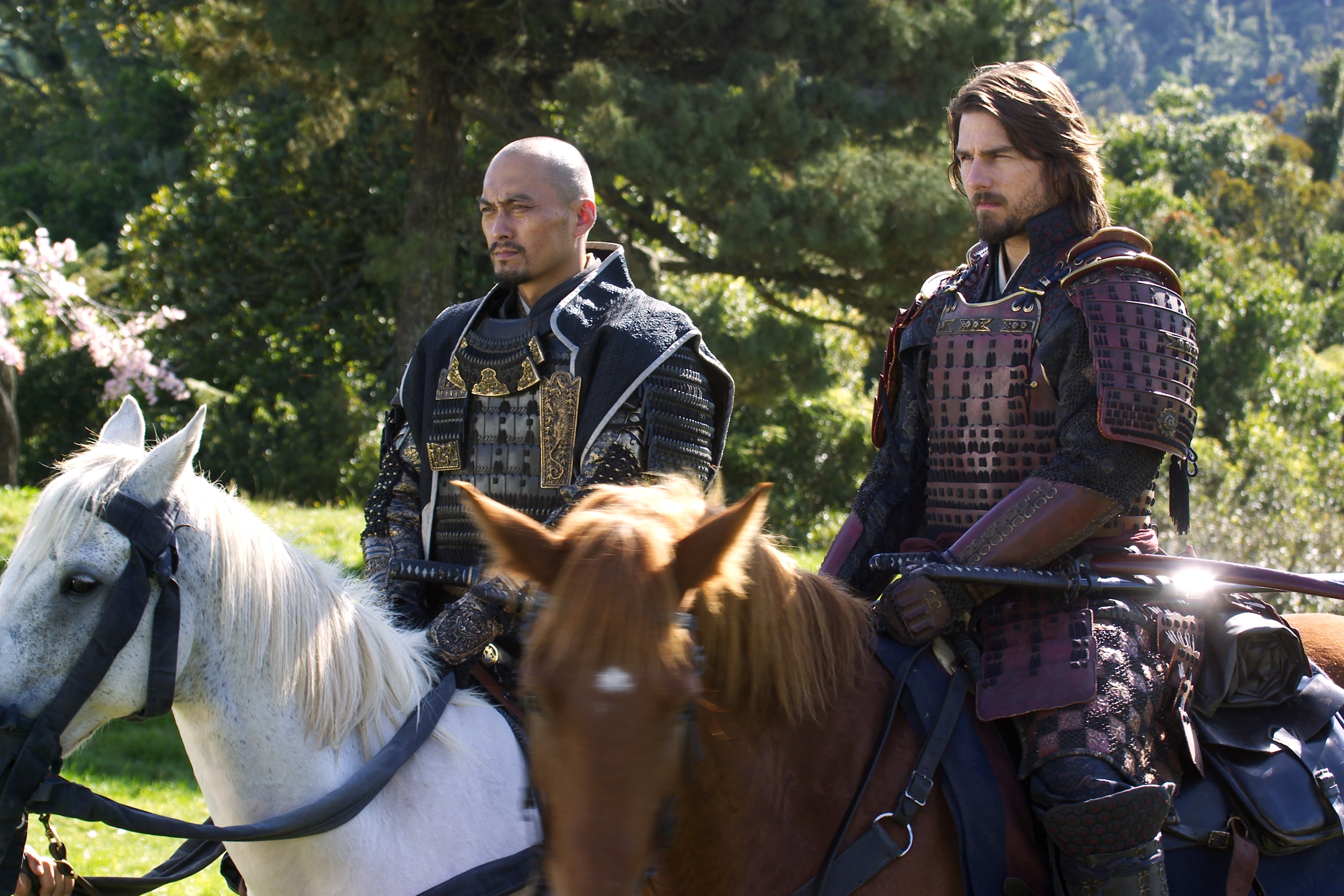
I'll demonstrate their relevance by applying these stages to the film 'The Last Samurai' with Tom Cruise. 

  1. Equilibrium- Military captain Nathan Algren is an alcoholic suffering from PTSD after his atrocities in the American Indian War. 
  2. Disequilibrium- During a battle Algren is outnumbered and ambushed by Samurai warriors. He is the only survivor and taken captive. 
  3. Realisation- As Algren becomes more aware of his 'enemies' and their lifestyle Algren comes to the understanding that they are being oppressed by colonial expansion. 
  4. Restoration- Algren's loyalties change and he takes up arms against the very army he once commanded.  
  5. Equilibrium- Algren shows the politicians how the Samurai lived honourably and sought only to protect what is theirs. He returns to the Samurai village having left his former lifestyle behind. 

Roland Barthes - Narrative Codes

Barthes' studies on semiotics and how meaning is constructed can be applied to film. Barthes argues that every narrative is woven around codes. He states that there are five different codes and that when a film uses only one, the narrative is 'closed' (meaning only one intended meaning can be denoted from it) but when the narrative uses more than one, it is known as 'open' (allowing for multiple interpretations). 

The five codes are as follows:


  • The Hermeneutic Code (HER): Using ambiguity and implication to build suspense. Audiences are intrigued to see how loose ends will be tied up. This code is most commonly implemented in police procedural dramas, where the audience's suspicions are frequently toyed with. 
  • The Enigma/Proairetic Code (ACT): Another code of suspense, but this time through actions rather than implications. The audience are in anticipation of how the action will be resolved, not in a state of mystery.  
  • The Symbolic Code (SYM): Often where semantic meanings are conveyed through a visual motif or symbol appearing, like the use of colour in 'Breaking Bad'. 
  • The Cultural Code (REF): Points to the shared knowledge of the audience. The contexts bear resemblance to relatable cultural factors. 
  • The Semantic Code (SEM): Underlying meanings and interpretations beyond the literal explanation.

Vladimir Propp - Character Archetypes

Propp is very similar to Todorov in his examination of narrative conflict (hero and villain, hero is branded, villain is overcome) but he also focused on archetypal character traits. 

  1. Hero- character driven and motivated to restore the equilibrium
  2. Villain- antagonist who initiates the disequilibrium and creates conflict against the hero.
  3. Dispatcher- character who sends the hero on his quest, often a noble or an elder giving great responsibility to the protagonist. 
  4. Donor- at some point in the narrative the hero is given an object or talisman to help them on their quest. The donor is the character who offers this aid.
  5. Helper- a loyal and stereotypically comical character, the helper follows the hero on his quest to offer assistance. 
  6. Princess- a love interest or character the hero attempts to win over who eventually recognises the hero's qualities. 
  7. False Hero- A usurper or praised character that is built up to be a hero, but his qualities are diminished by the hero's modesty. 

Joseph Campbell - Hero's Journey

In 1949 Campbell proposed the idea of the monomyth, or the hero's journey, which is the protagonist's arc over the course of the narrative. The three main stages he comes up with also tie into Syd Field's 3 Acts as well as Todorov's Equilibrium. They are called the Departure, Initiation, and Return. 

He lists many different events within each of the three stages, but in summary the Departure act is the 'Call to Action,' the Initiation is the 'Road of Trials' and the Return is 'Freedom to Live.'


Although I have mentioned Syd Field a lot, I do not feel that his 3 Act structure needs explaining, since we have seen it among these theorists in different forms. For example Todorov and Campbell both implement his structure but with more depth. 

When looking at the theories I would like to use in my own narrative, I think short films will be incredibly different to apply certain structure to. Therefore until I have examined the conventions of short films I do not want to select any of the above structures.


Friday, 23 September 2016

Structuring the Coursework

This year it will be a lot more difficult to organise the work, not only because we have 3 separate tasks to complete, but also because there isn't a logical order to approaching each of the tasks. Do I research the theories behind narrative and structure? Do I research the conventions of a short film? Do I analyse specific examples? I know I need to complete all of the above, but in what order? Can I analyse specific examples without knowing the conventions? Can I find the conventions without analysing specific examples? 

I have decided that the best way for me to structure the main task (the short film), is as follows:

1. Research on narrative theory

This will enable me to gain a broad understanding of story/structure/character. I shall look at the famous theorists but then try to find some who specifically explore short films as oppose to feature films.

2. Conventions of short films
 This is probably the most important bit of research, because my own product will have to reflect how I both conformed to and subverted conventional expectation. 

3. List of Camera Shots/Angles

From a technical perspective knowing the types of camera shots early on should play an advantage when critically evaluating other work, as well as when planning my own.

4. Types of Editing

Similar to knowing the camera shots, the editing is an area in which my understanding is needed, but at the moment quite uninformed. Learning about it early on should help me to get ahead when planning how to edit my work in a way that is engaging.

5. Researching genre

I do not like the idea of genre. It is far too categorical, labelling a product as one thing or another. However I think that it will help me to come to terms with how conventions are also different depending on the genre. At this point I will not choose a genre of my own because I would not have reviewed the successes and failures of other short films. 

6. Analysing specific examples

This is where I intend to start to shape my own ideas. I will critically look at the works of professional award-winning short films as well as other A-level students to get a broad sense of what works well and what doesn't.
7. Choosing a genre

Having looked at specific examples I feel like selecting a genre of my own will be the best step forward. Although I will not have a fixed idea on story and the characters, I hope to have seen enough variety from other sources to be able to decide which genre will be the right fit for me. 

8. Finding the story
At this stage my creativity will take hold. I shall think in terms of what I can use and what locations I have on offer in order to help suit my story to my surroundings, but ultimately I need to find a compelling narrative. 

9. Audience Research

When looking at audience we are analysing the product through a financial and industrial perspective rather than a creative one. It will help to give a clearer sense of direction when constructing my product and ancillary tasks since I will know who I'm tailoring it to. 

10. Writing the script
I already know a little bit about screenwriting, however I will need to look at how short fi ms are shaped through dialogue, since they will be dramatically different from a short film. Once this is done I will have a strong overview of the narrative and the journey of the characters.

11. Location scouting
With the script completed, I will have written the scenes in relation to a setting, but I should now find accessible locations that mirror the requirements of my story. Of course I will already be considering this when writing my script, so these planning stages are largely interchangeable. 

12. Storyboarding 
Camera shots, camera angles and mise-en-scene all need to be considered here. Even though I have done research into these areas in the past, I may do a quick post showing my knowledge of the variety of technical ways to capture a shot. Here I will apply this knowledge by drawing up a visual display of my narrative in the form of a storyboard, which shows what shots I hope to use. 


Tuesday, 20 September 2016

Choosing the Brief


The first thing that surprised me this year was the freedom of choice we have been given. There are many tasks which specialise on different focus areas from film, radio, print and television, offering students the chance to personalise their course with an area of interest. My main reason for selecting Media Studies as an A-level came from my love for film and television, so my decision will definitely be informed by that enthusiasm.

A short film in its entirety, lasting approximately five minutes, which may be live action or animated or a combination of both, together with two of the following three options:
  • A poster for the film
  • A radio trailer for the film
  • A film magazine review page featuring the film
Without doubt, this is the ideal brief for me. When I looked at the others, I found myself liking either the main task or the ancillary tasks, but not both. This option leapt off the page because it is perfectly engineered for me to put my creativity to the test.
A short film shall provide me with the means to build on areas of the film industry I would love to work in. For example, storytelling, screenwriting, cinematography, acting and editing. All of these are essential to determine how effective any film, short film or TV show is, and by choosing this brief I will get the opportunity to try out all of the above.
Not only this, but the secondary tasks engage some of my other hobbies. I love to read film magazines like Empire or Total Film for their reviews and updates in the film industry, so the last bullet point sounds incredibly engaging. Being critical of films is something that could be associated with journalism and the larger industry of print, so writing from a critical perspective will allow me to indulge my enjoyment of analysing cinematic products.
I wouldn't choose a radio trailer, because for starters I don't believe that it is an appropriate way to promote a visual product. Furthermore I do not want to be confined to the limits of the audio platform, since I feel that in the film industry promotional strategies like posters, TV spots and trailers are far more successful. The reason being that when promoting a visual product, the audience need to be able to see it in order to obtain a general understanding of what they will be watching.

Which brings me to my final choice. I will definitely be opting to make a poster for my film because this shall require me to put into practise what I have learnt from Photoshop over the last year but also allow me to apply that knowledge to a different form of promotion. Unlike making a magazine cover, this should enable me to create an intense, exciting and ambiguous poster to hook an audience without exposing too much information. So essentially I shall be using the same tools for a different purpose.

Having decided on my coursework brief for this year, my next post will set out a general plan for the coming months and how I intend to organise the tasks.